Showing posts with label audio. Show all posts

Sunday, 3 August 2014

Apple Jacks The Headphone Port


What do you mean Apple is getting rid of the headphone jack? Where's it going?

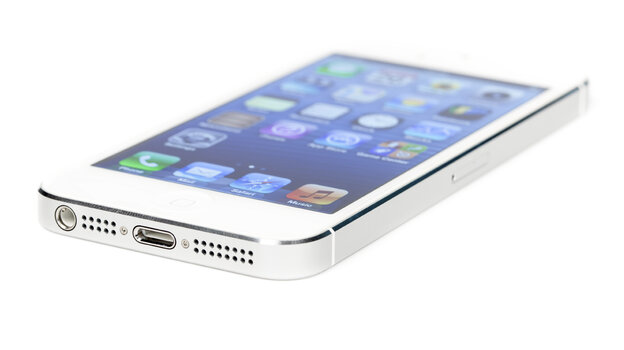
Apple maybe set to end its use of the standard 3.5mm headphone connector — the mini plug — in favor of its proprietary connector, the Lightning port. If it was to do that, new iPhones, iPads and iPods wouldn't work with old headphones. It's had more than a few industry folks and Apple fanatics upset, to say the least.
To make sense of the issue, All Things Considered contacted a couple of writers in the field. Host Audie Cornish spoke with Gordon Kelly, a contributor to Forbes, about the technological and business implications of Apple's switch. He says the Lightning port could theoretically improve audio specifications and additional "smart headphone" functionality, and that the company has little to lose — with a lot of profit to potentially gain. You can hear that conversation at the audio link above.
Cornish also recently sat down with 9to5Mac writer Jordan Kahn to discuss why the Lightning port might be good for consumers in the long run and how Apple has always been ahead of the industry game. You can read a transcript of that conversation below.
Explain how you learned about this. What's the sign that Apple might make this change?
Apple has introduced these new guidelines for manufacturers that allow them to build headphones that connect to an iPhone or iPad through the Lightning connector. That's the same small connector on the bottom of an iPhone or iPad that is currently used to charge the device. Apple first introduced the connector a couple years ago with the iPhone 5 to replace its old 30-pin connector.
Now that Apple is allowing companies to build headphones that connect with the Lightning connector, that might be the first hint that Apple could remove that old, legacy headphone jack from devices down the road.
Even the hint or rumor of something like this seems to put a scare in markets, right? Because essentially you can leave a bunch of devices orphans when they change technology. Everyone else's devices can become obsolete.
It's a possibility. If we look at past examples of similar things Apple has done, usually they come out with an adapter solution that will allow these new Lightning headphones to work with your legacy device that still uses the headphone jack or vice versa. I'd imagine we'll see solutions like that at least for a few years, until people make the transition to the new technology.
The speculation is heightened, because Apple just paid around $3 billion for the headphone company Beats Electronics. Does this news help make sense of that deal?
Certainly, if the new Lightning headphones are something that Apple is going to push as its next innovation in audio. That'll, I imagine, be something that trickles down to Beats, and I imagine Beats would come out with a pair of Lightning headphones. We'll have to see where Apple takes it and what manufacturers do with it.
There was a lot of speculation that the Beats deal was more about the streaming music service, but I think that Apple has made it pretty clear that they're also interested in the headphones side of the business. If they are really interested in pushing these new Lightning headphones, I think Beats would be the perfect outlet to do that.
Obviously, this goes way beyond Apple, right? You're talking about a legacy technology — the headphone jack — that's been around for ages. What's the reason for Apple fiddling around with it?
I think that the Lightning connector does provide some benefits to headphone manufacturers. One of those is the ability to draw power from the iPhone. Right now, when a company makes a pair of headphones that have high-end audio processing features like active noise cancellation, they actually have to build a battery into the headphones. With the Lightning connector, they'll be able to draw power from the device itself. That could save manufacturers money and bring these high-end audio features to cheaper headphones. So it might be a win for consumers at the end of the day, depending on what manufacturers do with the technology.
How big a deal is it when Apple moves from an industry standard?
They've never been shy about doing it in the past — the disk drive on their Macbooks, the Flash in the browser on their iPhones. It does cause a bit of a stink among consumers and reviewers when the change first happens, but Apple usually tries to be ahead of the curve and predict what technologies are going to become legacy technologies. And with the examples we've just mentioned, they've been successful with it.

Sunday, 29 June 2014

Why Apple’s Beats Acquisition May Be Its Smartest Move Yet


The most talked-about “secret” of 2014 was Apple’s $3 billion acquisition of Beats. Although it wasn’t officially announced until May 28, rumors swirled around the Internet for weeks.

Apple now owns Beats Electronics (the makers of the headphones and speakers) and Beats Music, a streaming service similar to Pandora and Spotify. Apple has also added Dr. Dre and Jimmy Iovine to its executive roster, though their roles have not yet been clarified publicly.
This turn of events represents a dynamic new era in Apple’s relationship with the music industry and with music fans.
The Beats Deal Goes Way Back
This isn’t the first time Apple has redefined the music industry. According to Moses Avalon, a music business analyst, this is a move the company has wanted since the inception of iTunes.
“For over a decade, Apple and the major labels have hated one another,” Avalon writes on hiswebsite. “Labels hated Apple for forcing universal pricing — every song being the same price — and for being an enabler to the destruction of their main model: the album.”
Avalon says that at one point, Universal threatened not to renew Apple’s music licenses if Apple didn’t allow variable pricing. Steve Jobs gave in, but Apple has been trying to escape Universal’s hold ever since.
“Insiders should know that a perpetuity license for content is what Apple is really buying today for $3.5 billion,” says Avalon. “Not a bunch of code they could write themselves in a weekend.”
Under my watch at the dawn of Apple’s earliest music initiatives, we were industry-facing — primarily ensuring that Macs were sold to artists and creative teams across entertainment. We launched the home studio movement with the Mac and Pro Tools to enable artists to have greater creativity and flexibility. When iTunes launched — coupled with the iPod and subsequent Apple products — an ecosystem was created that enabled millions of music lovers to integrate music into their lifestyles. These developments also helped breathe new life into the record industry by creating new channels of distribution and monetization for artists.
Both of these were critical milestones for the music industry, and this is the third chapter. Here are a few reasons why it might just be Apple’s smartest move yet:
1. Apple Has Talent
Jimmy Iovine and Dr. Dre come with powerful industry pedigrees that will attract even more artists to Apple’s unique talent pool. This is a huge draw for artists trying to connect with their fan base, which includes 800 million iTunes users and 40 million iTunes radio listeners. With Jimmy and Dre, artists will want to engage with Apple even more actively than they have to this point.
Apple will have more influence on artists, labels, and other members of the music industry ecosystem to create dynamic new models of distribution and monetization. The combination of tech innovation, visionary leadership, relationships, and industry credibility can’t be underestimated.
2. Apple Has Taste
One of the most enticing aspects of the deal is that Beats Music focuses on music curation by using real humans instead of algorithmic music discovery. Beats supports the discovery of music through sharing playlists of experts in listeners’ favorite musical genres. It offers suggestions based on artists users like, music they’ve listened to, and mood-relevant discovery through The Sentence.
The addition of Beats enhances Apple’s music offerings that integrate free streaming with iTunes Radio by now incorporating a music subscription service via Beats Music. Combined with the iTunes Store, it’s a powerful triad of services offering the industry multiple channels of distribution and monetization. Apple can also extend the Beats Music curation offering to iTunes Radio, which could close the UX gap with competing services in the market. In addition, the marketing buzz generated by the Apple/Beats deal could lure more listeners to iTunes Radio.
3. Apple Has Diversity
Apple’s strength has always been its ability to seamlessly integrate software and gadgets. Beats may be part of Apple’s foray into wearables. Elias Roman, CEO of Songza, suggests that Beats could be Apple’s Google Glass.
Apple has the iTunes experience, retail stores, and hardware devices, which now include Beats headphones. If Apple links all these facets well, it will become a juggernaut that few will be able to compete with.
4. Apple Has Deep Pockets
Because Apple makes plenty of revenue through the sales of its devices, it can afford to operate Beats Music at a loss. By providing a comprehensive solution that competing streaming services can’t, Apple can more easily devalue services such as Pandora and Spotify.
This could quickly lead to smaller services that have fewer subscribers and less marketing muscle quickly disappearing. Apple will deliver powerful marketing and offer bundled product and service discounts to amplify their new suite of offerings.
5. Apple Has Experience
Apple is the ultimate disruptor of the music industry, and Jimmy Iovine and Dr. Dre are known as disruptors themselves. Steve Jobs was the first person to broker a workable deal with the music industry during the post-Napster era, when piracy nearly overtook the old music business model.
Apple practically reinvented the music industry as we know it today, and the Beats acquisition is the first step toward curating that industry. Anything is possible if the right set of creative strategies and market navigations are executed — and there is every reason to believe they will be.
Apple’s acquisition of Beats has many guessing the next move of this tech giant. Adding well-known music industry veterans to the iTunes team shows that Apple is embracing artist-centric activities and contemplating even more creative ways to allow artists to monetize their relationships with fans by capitalizing on the growing artist-to-fan engagement trend.
This latest move may be the first of many steps toward the company reinforcing and extending its domination of music and entertainment. As a result, it will secure a greater market share, increase its revenues, and provide additional avenues for fans to discover and enjoy the music experience.