Showing posts with label apple. Show all posts

Saturday, 4 October 2014

3 Reasons Why Apple's iWatch Will Be A Gorgeous Flop

The race to own the wrist is in full swing ‒ and Apple hasn't even arrived. With less than two weeks to go (likely September 9th), here are three reasons why I think the iWatch will be a flop. The watch will be gorgeous, to be sure, but it won't come close to rivaling the adoption rate of other Apple tech.
The first hurdle is that it's really an evolutionary product category. Unlike the iPod, or iPhone or iPad, Apple isn't really inventing a new device ‒ it's working on a first release of a product that already has some big names staking out their claim in this category. Samsung (now on its 6th version), Motorola, LG and Withings to name a few.
Also, unlike the iPod, the iPhone and the iPad, we've owned and worn "wrist wearables" for generations. The iPod, the iPhone and the iPad were largely created from whole cloth - as standalone separate devices.
I'm not a watch connoisseur, but recent designs and aesthetics have come a long way from the clunky LCD blocks that comprised "first generation" wearable's for the wrist. Here's what a sampling of that competition looks like today ‒ which is to say not too shabby in their own right.
The second reason is the sheer amount of design hype. We've been teased and taunted for well over a year ‒ and trying to just guess what it might look like has been the personal hobby of some very sharp designers. The risk here is that the final iWatch design won't be that revolutionary from either the competition (above) ‒ or the fantasy design projects we've all seen before (below). So far, many of these have been elegant and impressive attempts to answer the fundamental question ‒ what could an iWatch look like?
With all of these as design placeholders, the iWatch reveal (always a big stage moment) just won't have the same wow factor as the iPod, the iPhone or the iPad. Once it is revealed ‒ we'll move at lightning connector speed into the third big hurdle ‒ value.
Price alone is perhaps the lowest threshold for diehard Apple fans because they're all very comfortable with expensive products that look elegant and make the right tech "statement." While the retail price is still unknown, it's been widely speculated to be about $300. I think it could easily be more because most of Apple's products tend to push pricing boundaries simply because they can.
Value, however, is a larger component than price ‒ and this is where the iWatch is basically an expensive addition or companion device to the iPhone itself. That's not unique to Apple because every version of wearable watch so far (including those from Samsung, Withings, LG and Motorola) lean heavily on the core component ‒ the one device you may return home to retrieve ‒ the smartphone itself. That means that whatever the final price of the iWatch ‒ $300, $400 ‒ or more, it's still just an expensive accessory. It will enhance the functionality of the iPhone ‒ and will collaborate seamlessly with it, but it won't replace it ‒ and that's a big challenge for all the wrist wearable manufacturers ‒ including Apple.
Even 'The Woz' (Apple Co-Founder Steve Wozniak) thinks the whole wearable category is a big risk for everyone ‒ including Apple.
"I feel that wearables are a hard sell. They are go-betweens for your smartphone but are an extra piece and need special advantages that the smartphone doesn't have, in my opinion. If they are just a Bluetooth go-between then it could wind up in the category of Bluetooth headsets: Fun to wear and show off for a day." Apple Co‒FounderSteve Wozniak ‒ C|Net article
In terms of hype, here's how Morgan Stanley is forecasting the adoption rate relative to other laudable Apple successes.
Don't get me wrong, the launch will be an exciting event - and the iWatch will be a typically impressive design achievement, but it won't be the breakthrough we've all come to expect from one of the worlds biggest tech giants. Given the high expectations, the wildly bullish forecasts by analysts and the competition already on the global stage, I think we'll look back this time next year and say that this first version of the iWatch was a flop.

Monday, 15 September 2014

Apple iPhone 6 Review

Apple iPhone 6 Review

Apple iPhone 6 Review Scoring Summary

Style & Handling
User Friendliness
Feature Set
Performance
Battery Power
Overall Score3G.co.uk grey star


Pros:Cons:
+ Beautiful build- Relatively low-res screen
+ Good size camera- Expensive
+ Great camera- Lacks innovation

Full Review and Specification for the Apple iPhone 6


The iPhone 6 is perhaps the most eagerly anticipated phone of the year and in just a few short days you’ll be able to buy one, but should you? There’s no doubt that it’s a great handset but for better or worse it’s also a big change over the iPhone 5s and on paper it doesn’t really offer anything that you can’t get elsewhere. So is it worth your hard earned money? Read on to find out.

Screen

Apple iPhone 6 - Display

After all the leaks and rumours in the run up to its announcement the iPhone 6 is a phone of few surprises and one of the biggest changes- its screen size, has been long expected. It’s gone from 4.0 inches as found on the iPhone 5s to 4.7 inches, which is the same size as the Samsung Galaxy Alpha or the original HTC One for example.

For our money that’s a good thing. 4.0 inches was starting to look distinctly on the small side and it’s about time Apple caught up, but we’d wager that a lot of people liked the compact design of iPhone’s past so for them it may not be such a welcome change.

But 4.7 inches is still far from the phablet territory of the iPhone 6 Plus. It’s a size which means the iPhone 6 is still easily pocketable and can just about be used with one hand, while at the same time it makes it far better for typing, web browsing and watching videos than the iPhone 5S ever could be.

Whether you’re a fan of the screen size or not the actual quality is pretty impressive. At 750 x 1334 it’s higher resolution than the iPhone 5S but with the extra size it still has exactly the same pixel density, so if you were happy with how sharp the iPhone 5S’s screen is you’ll be happy with this too.

That said Apple could have done more, because that’s a pixel density which falls some way short of most Android rivals and the difference in sharpness is noticeable if you put them side by side.

Thankfully while Apple may have slightly dropped the ball on the resolution, its Retina HD display is about more than just packing in the pixels. It also delivers superior contrast and viewing angles to any previous iPhone and even has better colour reproduction and an improved polariser so that it’s easier to see when wearing sunglasses.

All of which leads to by far the best viewing experience we’ve yet seen on an iPhone and means the iPhone 6 has one of the best phone displays around, despite the slightly disappointing resolution.

Design


If there’s one thing Apple always gets right it’s design and the iPhone 6 is one of the company’s best looking products yet. With a metal and glass build it was always going to look premium but Apple hasn’t simply used expensive materials, it’s also thought about the construction.

You can see that in the way the curved edges glide almost seamlessly into the screen and in the fact that despite being bigger than before it’s also slimmer at just 6.9mm thin. It looks and feels great and while you won’t mistake this for an iPhone 5s you also won’t think it’s anything other than an Apple handset.

Apple iPhone 6 - Thin Design

Being bigger at 138.1 x 67mm it’s naturally harder to use one-handed but Apple has thought of that too, by moving the power button to the side and elongating some buttons as well as working in clever features on the screen to ensure that whatever you’re interacting with can always be aligned with your thumb.

It should be a little more durable than past iPhone’s too, thanks to a supposedly stronger display. This isn’t sapphire but it is supposedly strong enough to survive drops and scratches. It’s a little disappointing that Apple didn’t go one step further and make its phone dust and water resistant like other companies are starting to do though.

Power


It’s never easy to directly compare the power of an iPhone to anything else because on paper its specs just don’t match up. But to make things even harder we don’t even know for sure what the specs of the iPhone 6 are, as Apple has simply said that it has a 64-bit A8 chip, though many sites claim that it’s a 1.4GHz dual-core processor with 1GB of RAM.

Whatever the case though, in use the iPhone 6 feels as slick and smooth as you’d expect. Of course there’s nothing out there to really tax it yet, with all currently available apps and games designed to work smoothly on the iPhone 5s, so it’s hard to say how it will fare down the line but Apple promises that it’s substantially more powerful than last year’s phone.

Gamers can rest easy too, as the Cupertino company has included a new technology called ‘Metal’, which allows the CPU and GPU to work together to deliver console-style games.

Camera

Apple iPhone 6 - Camera

We couldn’t help but feel a little disappointed when we heard that Apple once again put an 8 megapixel camera in its phone, but this isn’t the same 8 megapixel camera as we got in the iPhone 5S.

Focus Pixels allow it to autofocus faster than ever, there’s improved face detection, exposure control, digital image stabilisation to counter motion blur and shaky hands and improved photo apps to let you quickly edit images.

The video camera has seen even more improvements. It can film in 1080p at 60fps or 720p in slow-motion at 240fps. There’s video stabilisation to keep shots steady, continuous autofocus and you can even shoot time-lapse videos.

Meanwhile the FaceTime HD camera can capture up to 81% more light than previously and features a new burst mode which can take 10 photos per second, making it better than ever for both selfies and video calls.

Features


The iPhone 6 is light on new features which don’t directly tie into something else such as the camera or the screen, all of which have been discussed above. The main new feature is Apple Pay which uses NFC to allow you to make contactless payments. It’s got the potential to be a hugely useful feature and with Apple backing it contactless payments might become a lot more common than they are now.

On the other hand Android phones have included NFC and contactless payment solutions for a long time, so while it’s a useful feature it seems more like Apple is playing catch-up here than truly innovating.

The two big features from the iPhone 5S have made a return too, specifically the motion co-processor which tracks your activity without killing your battery and Touch ID, which lets you unlock your phone and approve purchases with your fingerprint.

These features are just as good as ever and in combination with iOS 8 Touch ID is getting even better, as developers can now use it with third-party apps. While the M8 motion co-processor can now measure steps, distance and elevation changes.

Battery life, memory and connectivity

Apple iPhone 6 - Connectivity

As usual Apple hasn't confirmed the size of the iPhone 6’s battery, so we’ll have to wait for someone to take it apart. But the company has said that it can last for up to 14 hours of talk time, 10 days of standby time, 11 hours of internet use or 11 hours of video.

All of which is pretty good and is down to a combination of the battery itself and a more efficient processor. It still doesn’t sound like quite a match for the likes of the Samsung Galaxy S5 for example though.

The iPhone 6 comes with a choice of 16, 64 or 128GB of storage, with 32GB MIA for some reason, so there’s the potential for a lot, but there’s no microSD card slot and with the 128GB model costing £699 Apple hasn’t made higher storage capacities all that affordable.

For connectivity you get Wi-Fi, 3G, Bluetooth 4.0, 4G and NFC. It’s worth noting that the iPhone 6 also supports 4G LTE-A speeds of up to 150Mbps.

Early verdict


The iPhone 6 is a phone which has almost everything you could want all delivered in a stunning new design and with flagship power. It’s as expensive as always, the screen could be higher resolution and we can’t help but feel that it’s one of Apple’s less innovative offerings but the whole package has been put together so well that it hardly matters.

Apple iPhone 6 Specification


iPhone 6
Colours
Available in silver, gold, and space gray,
Dimensions
138.1 mm x 67.0 mm x 6.9 mm
Weight
129 grams
Screen
4.7-inch (diagonal) LED-backlit widescreen Multi‑Touch display with IPS technology
Resolution
1334-by-750-pixel resolution at 326 ppi
Chips
A8 chip with 64-bit architecture

M8 motion coprocessor
Memory
16GB,64GB and 128GB  
iSight Camera
New 8-megapixel iSight camera with 1.5µ pixels

Autofocus with Focus Pixels
Facetime Camera
1.2-megapixel photos (1280 by 960)
Video recording
1080p HD video recording (30 fps or 60 fps)
Touch ID
Fingerprint identity sensor built into the Home button
Battery
Talk time: Up to 14 hours on 3G

Standby time: Up to 10 days (250 hours)

Video playback: Up to 11 hours
Connectivity
NFC, VoLTE, WiFi, Bluetooth, 4G LTE
SIM Card
Nano-SIM

Sunday, 3 August 2014

Apple Jacks The Headphone Port


What do you mean Apple is getting rid of the headphone jack? Where's it going?

Apple maybe set to end its use of the standard 3.5mm headphone connector — the mini plug — in favor of its proprietary connector, the Lightning port. If it was to do that, new iPhones, iPads and iPods wouldn't work with old headphones. It's had more than a few industry folks and Apple fanatics upset, to say the least.
To make sense of the issue, All Things Considered contacted a couple of writers in the field. Host Audie Cornish spoke with Gordon Kelly, a contributor to Forbes, about the technological and business implications of Apple's switch. He says the Lightning port could theoretically improve audio specifications and additional "smart headphone" functionality, and that the company has little to lose — with a lot of profit to potentially gain. You can hear that conversation at the audio link above.
Cornish also recently sat down with 9to5Mac writer Jordan Kahn to discuss why the Lightning port might be good for consumers in the long run and how Apple has always been ahead of the industry game. You can read a transcript of that conversation below.
Explain how you learned about this. What's the sign that Apple might make this change?
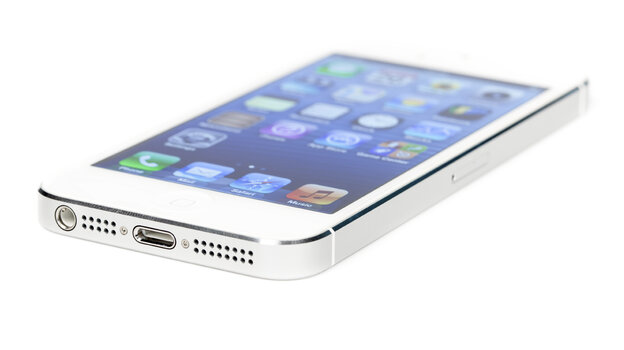
Apple has introduced these new guidelines for manufacturers that allow them to build headphones that connect to an iPhone or iPad through the Lightning connector. That's the same small connector on the bottom of an iPhone or iPad that is currently used to charge the device. Apple first introduced the connector a couple years ago with the iPhone 5 to replace its old 30-pin connector.
Now that Apple is allowing companies to build headphones that connect with the Lightning connector, that might be the first hint that Apple could remove that old, legacy headphone jack from devices down the road.
Even the hint or rumor of something like this seems to put a scare in markets, right? Because essentially you can leave a bunch of devices orphans when they change technology. Everyone else's devices can become obsolete.
It's a possibility. If we look at past examples of similar things Apple has done, usually they come out with an adapter solution that will allow these new Lightning headphones to work with your legacy device that still uses the headphone jack or vice versa. I'd imagine we'll see solutions like that at least for a few years, until people make the transition to the new technology.
The speculation is heightened, because Apple just paid around $3 billion for the headphone company Beats Electronics. Does this news help make sense of that deal?
Certainly, if the new Lightning headphones are something that Apple is going to push as its next innovation in audio. That'll, I imagine, be something that trickles down to Beats, and I imagine Beats would come out with a pair of Lightning headphones. We'll have to see where Apple takes it and what manufacturers do with it.
There was a lot of speculation that the Beats deal was more about the streaming music service, but I think that Apple has made it pretty clear that they're also interested in the headphones side of the business. If they are really interested in pushing these new Lightning headphones, I think Beats would be the perfect outlet to do that.
Obviously, this goes way beyond Apple, right? You're talking about a legacy technology — the headphone jack — that's been around for ages. What's the reason for Apple fiddling around with it?
I think that the Lightning connector does provide some benefits to headphone manufacturers. One of those is the ability to draw power from the iPhone. Right now, when a company makes a pair of headphones that have high-end audio processing features like active noise cancellation, they actually have to build a battery into the headphones. With the Lightning connector, they'll be able to draw power from the device itself. That could save manufacturers money and bring these high-end audio features to cheaper headphones. So it might be a win for consumers at the end of the day, depending on what manufacturers do with the technology.
How big a deal is it when Apple moves from an industry standard?
They've never been shy about doing it in the past — the disk drive on their Macbooks, the Flash in the browser on their iPhones. It does cause a bit of a stink among consumers and reviewers when the change first happens, but Apple usually tries to be ahead of the curve and predict what technologies are going to become legacy technologies. And with the examples we've just mentioned, they've been successful with it.

Sunday, 29 June 2014

Why Apple’s Beats Acquisition May Be Its Smartest Move Yet


The most talked-about “secret” of 2014 was Apple’s $3 billion acquisition of Beats. Although it wasn’t officially announced until May 28, rumors swirled around the Internet for weeks.

Apple now owns Beats Electronics (the makers of the headphones and speakers) and Beats Music, a streaming service similar to Pandora and Spotify. Apple has also added Dr. Dre and Jimmy Iovine to its executive roster, though their roles have not yet been clarified publicly.
This turn of events represents a dynamic new era in Apple’s relationship with the music industry and with music fans.
The Beats Deal Goes Way Back
This isn’t the first time Apple has redefined the music industry. According to Moses Avalon, a music business analyst, this is a move the company has wanted since the inception of iTunes.
“For over a decade, Apple and the major labels have hated one another,” Avalon writes on hiswebsite. “Labels hated Apple for forcing universal pricing — every song being the same price — and for being an enabler to the destruction of their main model: the album.”
Avalon says that at one point, Universal threatened not to renew Apple’s music licenses if Apple didn’t allow variable pricing. Steve Jobs gave in, but Apple has been trying to escape Universal’s hold ever since.
“Insiders should know that a perpetuity license for content is what Apple is really buying today for $3.5 billion,” says Avalon. “Not a bunch of code they could write themselves in a weekend.”
Under my watch at the dawn of Apple’s earliest music initiatives, we were industry-facing — primarily ensuring that Macs were sold to artists and creative teams across entertainment. We launched the home studio movement with the Mac and Pro Tools to enable artists to have greater creativity and flexibility. When iTunes launched — coupled with the iPod and subsequent Apple products — an ecosystem was created that enabled millions of music lovers to integrate music into their lifestyles. These developments also helped breathe new life into the record industry by creating new channels of distribution and monetization for artists.
Both of these were critical milestones for the music industry, and this is the third chapter. Here are a few reasons why it might just be Apple’s smartest move yet:
1. Apple Has Talent
Jimmy Iovine and Dr. Dre come with powerful industry pedigrees that will attract even more artists to Apple’s unique talent pool. This is a huge draw for artists trying to connect with their fan base, which includes 800 million iTunes users and 40 million iTunes radio listeners. With Jimmy and Dre, artists will want to engage with Apple even more actively than they have to this point.
Apple will have more influence on artists, labels, and other members of the music industry ecosystem to create dynamic new models of distribution and monetization. The combination of tech innovation, visionary leadership, relationships, and industry credibility can’t be underestimated.
2. Apple Has Taste
One of the most enticing aspects of the deal is that Beats Music focuses on music curation by using real humans instead of algorithmic music discovery. Beats supports the discovery of music through sharing playlists of experts in listeners’ favorite musical genres. It offers suggestions based on artists users like, music they’ve listened to, and mood-relevant discovery through The Sentence.
The addition of Beats enhances Apple’s music offerings that integrate free streaming with iTunes Radio by now incorporating a music subscription service via Beats Music. Combined with the iTunes Store, it’s a powerful triad of services offering the industry multiple channels of distribution and monetization. Apple can also extend the Beats Music curation offering to iTunes Radio, which could close the UX gap with competing services in the market. In addition, the marketing buzz generated by the Apple/Beats deal could lure more listeners to iTunes Radio.
3. Apple Has Diversity
Apple’s strength has always been its ability to seamlessly integrate software and gadgets. Beats may be part of Apple’s foray into wearables. Elias Roman, CEO of Songza, suggests that Beats could be Apple’s Google Glass.
Apple has the iTunes experience, retail stores, and hardware devices, which now include Beats headphones. If Apple links all these facets well, it will become a juggernaut that few will be able to compete with.
4. Apple Has Deep Pockets
Because Apple makes plenty of revenue through the sales of its devices, it can afford to operate Beats Music at a loss. By providing a comprehensive solution that competing streaming services can’t, Apple can more easily devalue services such as Pandora and Spotify.
This could quickly lead to smaller services that have fewer subscribers and less marketing muscle quickly disappearing. Apple will deliver powerful marketing and offer bundled product and service discounts to amplify their new suite of offerings.
5. Apple Has Experience
Apple is the ultimate disruptor of the music industry, and Jimmy Iovine and Dr. Dre are known as disruptors themselves. Steve Jobs was the first person to broker a workable deal with the music industry during the post-Napster era, when piracy nearly overtook the old music business model.
Apple practically reinvented the music industry as we know it today, and the Beats acquisition is the first step toward curating that industry. Anything is possible if the right set of creative strategies and market navigations are executed — and there is every reason to believe they will be.
Apple’s acquisition of Beats has many guessing the next move of this tech giant. Adding well-known music industry veterans to the iTunes team shows that Apple is embracing artist-centric activities and contemplating even more creative ways to allow artists to monetize their relationships with fans by capitalizing on the growing artist-to-fan engagement trend.
This latest move may be the first of many steps toward the company reinforcing and extending its domination of music and entertainment. As a result, it will secure a greater market share, increase its revenues, and provide additional avenues for fans to discover and enjoy the music experience.

Saturday, 7 June 2014

Quit Trying to Be Like Steve Jobs


The opening question the venture capitalist asked after I sat down to be interviewed was, “How did a marketing guy end up being considered for a CEO job?”
After a 20-year career in high-tech that included managing development, running worldwide sales, and heading up marketing for a few moderately sized public companies, that’s the question the guy led with.
I won’t lie and say it wasn’t off-putting, but I was used to it. It’s a relatively common theme among the Silicon Valley geek crowd. There are exceptions, but in general, they just don’t get marketing.
That was nearly 15 years ago and things have changed. Entrepreneurs and VCs have a greater respect for marketing and communications these days. One of the reasons for that is a little company called Apple.Steve Jobs was a positioning genius, but he wasn’t the only Apple executive with marketing in his DNA.
I just watched an interview (video below) with the company’s former VP of marketing communications, Allison Johnson, and let me tell you, this woman gets marketing. Some of what she had to say could have come out of my own mouth, plus there were some great lessons from her years working with Jobs.
Here’s my interpretation of some of the major points that I think are relevant for entrepreneurs and business leaders.
You can learn a lot from a hands-on boss. Jobs was famously hands-on about certain things, namely product design and communications. Johnson described how he once got hold of an email meant to train AT&T salespeople on how to sell the iPhone, and he edited it to make sure the product was positioned accurately.
Funny, when I ran marketing, I used to do the same thing. Drove people crazy. And, yes, I admit to being a control freak. Like it or not, I’m afraid it comes with the territory.
In any case, I’ve noticed how nervous marketers and agencies get around CEOs and I don’t know why. Sometimes, they’re better at positioning and marketing their products than the supposed experts are. And it certainly doesn’t seem like Johnson got to where she is by being proprietary about her domain.
Product development and marketing should be tied at the hip. Most people think of marketing communications as the place where products go after they’re developed and ready to be launched. Granted, that’s the way it happens in most companies, but that’s not the way it is at Apple, that’s not how it worked at my companies, and it’s not how I recommend anyone do it.
The role of marketing in planning a product rollout is to get the product positioning right. And the best way to do that is to be intimately involved with the development folks relatively early on in the process. More than anything else, your product is your brand. Likewise, it informs how you communicate everything about it to the world.
The only way to get it right and come up with the best communication strategy and content is to really connect with the product, its capabilities, its value, and what it does for customers that use it.
Quit trying to be like Steve Jobs … or Apple. For years now, executives and entrepreneurs have been trying to be and manage like Jobs. They’ve even been trying to remake their management teams and their companies in his and Apple’s image. Truth is, it doesn’t work that way.
Johnson said, “The thing that Steve did better than anyone else is, he was his authentic self.”
Most of us don’t know ourselves very well. The better you know who you are – your purpose, what you stand for, what you believe in, your strengths and weaknesses – the more genuine you’ll be. Strive to be the best version of you, not someone else. And that’s what you should communicate to the world.
Besides, Apple is a unique company. Its culture is cult-like. Its iconic products create categories. If your products are that good, then maybe you can manage and market the way Apple does. But few companies can truly live up to that claim.
To the audience of entrepreneurs, Johnson added, “We don’t need more Apples. We need more you.”
Don’t get hung up on labels. Apparently Steve Jobs hated labels, especially words like marketing and branding. He didn’t like what they represented in some people’s minds. He wanted Apple’s marketing to add value by teaching customers about the company’s products. By showing them how they could be used and what they could do. He didn’t want them in selling mode.
I feel exactly the same way. We often fall into the labels trap, especially these days in our distracted, attention-deficit, sound-bite culture.
Truth is, just because you wear a black mock turtleneck, blue jeans and sneakers, that doesn’t make you Steve Jobs. Just because you call yourself an entrepreneur or a CEO, it doesn’t make you one. They’re nothing but labels. And they’re really no different than the way that VC judged me in the interview.
In case you’re wondering how that turned out, not only did I not let the VC rattle me, I must have had a pretty good comeback because I did get the job. Go figure.