Tuesday, 26 August 2014

11 Simple Concepts to Become a Better Leader


Being likeable will help you in your job, business, relationships, and life. I interviewed dozens of successful business leaders in my last book, Likeable Business, to determine what made them so likeable and their companies so successful. All of the concepts are simple, and yet, perhaps in the name of revenues or the bottom line, we often lose sight of the simple things - things that not only make us human, but can actually help us become more successful. Below are the eleven most important principles to integrate to become a better leader:
1. Listening
"When people talk, listen completely. Most people never listen." - Ernest Hemingway
Listening is the foundation of any good relationship. Great leaders listen to what their customers and prospects want and need, and they listen to the challenges those customers face. They listen to colleagues and are open to new ideas. They listen to shareholders, investors, and competitors. Here's why the best CEO's listen more.
2. Storytelling
"Storytelling is the most powerful way to put ideas into the world today." -Robert McAfee Brown
After listening, leaders need to tell great stories in order to sell their products, but more important, in order to sell their ideas. Storytelling is what captivates people and drives them to take action. Whether you're telling a story to one prospect over lunch, a boardroom full of people, or thousands of people through an online video - storytelling wins customers.
3. Authenticity
"I had no idea that being your authentic self could make me as rich as I've become. If I had, I'd have done it a lot earlier." -Oprah Winfrey
Great leaders are who they say they are, and they have integrity beyond compare. Vulnerability and humility are hallmarks of the authentic leader and create a positive, attractive energy. Customers, employees, and media all want to help an authentic person to succeed. There used to be a divide between one’s public self and private self, but the social internet has blurred that line. Tomorrow's leaders are transparent about who they are online, merging their personal and professional lives together.
4. Transparency
"As a small businessperson, you have no greater leverage than the truth." -John Whittier
There is nowhere to hide anymore, and businesspeople who attempt to keep secrets will eventually be exposed. Openness and honesty lead to happier staff and customers and colleagues. More important, transparency makes it a lot easier to sleep at night - unworried about what you said to whom, a happier leader is a more productive one.
5. Team Playing
"Individuals play the game, but teams beat the odds." -SEAL Team Saying
No matter how small your organization, you interact with others every day. Letting others shine, encouraging innovative ideas, practicing humility, and following other rules for working in teams will help you become a more likeable leader. You’ll need a culture of success within your organization, one that includes out-of-the-box thinking.
6. Responsiveness
"Life is 10% what happens to you and 90% how you react to it." -Charles Swindoll
The best leaders are responsive to their customers, staff, investors, and prospects. Every stakeholder today is a potential viral sparkplug, for better or for worse, and the winning leader is one who recognizes this and insists upon a culture of responsiveness. Whether the communication is email, voice mail, a note or a tweet, responding shows you care and gives your customers and colleagues a say, allowing them to make a positive impact on the organization.
7. Adaptability
"When you're finished changing, you're finished." -Ben Franklin
There has never been a faster-changing marketplace than the one we live in today. Leaders must be flexible in managing changing opportunities and challenges and nimble enough to pivot at the right moment. Stubbornness is no longer desirable to most organizations. Instead, humility and the willingness to adapt mark a great leader.
8. Passion
"The only way to do great work is to love the work you do." -Steve Jobs
Those who love what they do don’t have to work a day in their lives. People who are able to bring passion to their business have a remarkable advantage, as that passion is contagious to customers and colleagues alike. Finding and increasing your passion will absolutely affect your bottom line.
9. Surprise and Delight
"A true leader always keeps an element of surprise up his sleeve, which others cannot grasp but which keeps his public excited and breathless." -Charles de Gaulle
Most people like surprises in their day-to-day lives. Likeable leaders underpromise and overdeliver, assuring that customers and staff are surprised in a positive way. There are a plethora of ways to surprise without spending extra money - a smile, We all like to be delighted — surprise and delight create incredible word-of-mouth marketing opportunities.
10. Simplicity
"Less isn't more; just enough is more." -Milton Glaser
The world is more complex than ever before, and yet what customers often respond to best is simplicity — in design, form, and function. Taking complex projects, challenges, and ideas and distilling them to their simplest components allows customers, staff, and other stakeholders to better understand and buy into your vision. We humans all crave simplicity, and so today's leader must be focused and deliver simplicity.
11. Gratefulness
"I would maintain that thanks are the highest form of thought, and that gratitude is happiness doubled by wonder." -Gilbert Chesterton
Likeable leaders are ever grateful for the people who contribute to their opportunities and success. Being appreciative and saying thank you to mentors, customers, colleagues, and other stakeholders keeps leaders humble, appreciated, and well received. It also makes you feel great! Donor's Choose studied the value of a hand-written thank-you note, and actually found donors were 38% more likely to give a 2nd time if they got a hand-written note!
The Golden Rule: Above all else, treat others as you’d like to be treated
By showing others the same courtesy you expect from them, you will gain more respect from coworkers, customers, and business partners. Holding others in high regard demonstrates your company’s likeability and motivates others to work with you. This seems so simple, as do so many of these principles — and yet many people, too concerned with making money or getting by, fail to truly adopt these key concepts.

Are we already over Wearable Technology?


I've been wearing a Nike FuelBand for about 3 years now. I'm actually on my 3rd one (2 original and now on the SE version) having had the first 2 fail and been replaced by Nike in London - great customer service I have to say.

But despite enjoying the novelty of the points collection, the smooth, slick Bluetooth data transfer to my iPhone App and the pretty stellar batter life (usually around 8-10 Days) - essentially.. it's a watch.
Sure it's the watch I wear every day without fail, it's great in the dark and it does tell the time - but this is hardly the promise of the much heralded age of Wearable Technology.

Prove the utility. Fast.


I am struggling to remember how many years running it has been "the year of mobile" but I am pretty certain we are running onto a "decade of mobile" and even now most large brands / companies / agencies *ahem* are yet to truly embrace mobile.
This in some ways is hardly surprising as digital marketing and technology has grown up in a broadband first world - whereas in emerging economies it's far more appropriate to talk about "mobile natives" than the "digital natives" of the US and Western Europe.
However wearable technologies, be they wristbands / eyeware (Glass) / heartbeat monitors or cameras - need to overcome the same hurdle that mobile has been facing for so long - proving the utility.

More than just health tracking.

One area we see the utility case is in health. Devices in this space are seemingly appearing on a monthly basis and may even be a contributor to the stagnating personal health market in the UK.
According to Mintel the average spend by UK consumers on a gym membership rose just £2 between 2009-2014 (£40 - £42) - whilst in the same time period we have seen an explosion of health tracking devices from Jawbone, Nike, Adidas, Withings and many others besides.
However if we are to hold the actions of Google with any weight, (which I'm going to suggest is probably wise...) the world's largest mobile OS believes we are all going to be doing a whole lot more than tracking our steps with Android for wearables - unveiling a suite of new devices using it's scarily accurate Google Now predictive assistant technology.
The platform certainly shows a lot of promise - and finally adds the style factor to the tech which for many consumers is the ongoing barrier - but only in the implementation and ease of use - not to mention price are we likely to see them win the war on this one.

Time to close the gap.

The hype machine is good at killing a valuable idea - and I certainly believe many of the devices on show right now are valuable ideas, and could even be great - but as with every technology revolution we need to find ways of solving a essential human problem.
Right now it's hard to make a case that these devices do that problem solving orders of magnitude better than the current high end smartphone you already own, and already have gotten so used to carrying around that you can't go with out it.
The wearable tech industry may need to be willing to sacrifice the do-it-all smartphone model to succeed - and crucially build services that will sit on top of these that solve those problems.


Sunday, 3 August 2014

Enabling The Next Internet Wave In China


The leaders of China’s Internet success stories are rapidly becoming part of China’s establishment, interacting frequently with senior government leaders. Last week, for instance, several China Internet CEOs were part of Xi Jinping’s trip to Seoul. As they have these opportunities to spend time with policymakers, what should they be arguing is necessary for the next era of China’s Internet economy to be as successful as the one they have already profited from so well?
  • Enhancing workforce skills. It should be obvious to all that universities should be graduating students equipped with the technical and business skills to succeed in operating companies. It is, however, entirely obvious today that they are not. Government action to make university curricula relevant for the growth in internet related jobs is.
  • Sustaining openness to international ideas and capital. China has profited greatly from an Internet industry structure that encouraged the development of China relevant business models and local champions to deliver them. Yet often inspiration and stimulation for the business model came from outside China. And today, much of the world is looking to China’s internet leaders for their own inspiration. There is very much a two-way flow of ideas and investments. This benefits everyone.
  • Enhancing data protection for individuals from businesses who are using their data. Many private companies and state-owned enterprises hold vast amounts of information on their customers. While new laws have been passed regarding how they are allowed to use such data, what permissions they should obtain, and the like, consumer confidence in the system is low. It could take only a few high profile breaches of personal information (e.g. from a bank or a telco) to have Chinese citizens pull back from providing their personal data so freely online. It is essential that China’s leading Internet companies are seen to be role models in data protection.
  • Encouraging national markets. Most Internet businesses are born national. Yet regulations at a city or provincial level can hold back the development of efficient national markets that would benefit consumers. Constraints on selling second hand cars across provincial boundaries is one example. Policymakers should roll back regulations that constrain markets to the provincial or city level.
  • IP protection. Increasingly, China’s internet leaders are developing a substantial amount of in-house intellectual property. They want to be certain they can protect this IP in China and internationally as they globalize. Ensuring they can get swift redress when they find their IP being used by others is key. For an Internet player guilty of using someone else's IP, a small financial fine in 12 months is almost irrelevant when a business is growing at Internet speed. Courts need to decide quickly if a business model is legitimate or not.
Swift action on these levers will place China’s Internet industries in a much stronger position to succeed going forward.

Apple Jacks The Headphone Port


What do you mean Apple is getting rid of the headphone jack? Where's it going?

Apple maybe set to end its use of the standard 3.5mm headphone connector — the mini plug — in favor of its proprietary connector, the Lightning port. If it was to do that, new iPhones, iPads and iPods wouldn't work with old headphones. It's had more than a few industry folks and Apple fanatics upset, to say the least.
To make sense of the issue, All Things Considered contacted a couple of writers in the field. Host Audie Cornish spoke with Gordon Kelly, a contributor to Forbes, about the technological and business implications of Apple's switch. He says the Lightning port could theoretically improve audio specifications and additional "smart headphone" functionality, and that the company has little to lose — with a lot of profit to potentially gain. You can hear that conversation at the audio link above.
Cornish also recently sat down with 9to5Mac writer Jordan Kahn to discuss why the Lightning port might be good for consumers in the long run and how Apple has always been ahead of the industry game. You can read a transcript of that conversation below.
Explain how you learned about this. What's the sign that Apple might make this change?
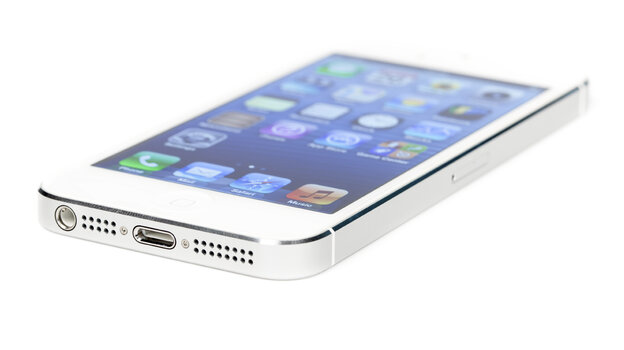
Apple has introduced these new guidelines for manufacturers that allow them to build headphones that connect to an iPhone or iPad through the Lightning connector. That's the same small connector on the bottom of an iPhone or iPad that is currently used to charge the device. Apple first introduced the connector a couple years ago with the iPhone 5 to replace its old 30-pin connector.
Now that Apple is allowing companies to build headphones that connect with the Lightning connector, that might be the first hint that Apple could remove that old, legacy headphone jack from devices down the road.
Even the hint or rumor of something like this seems to put a scare in markets, right? Because essentially you can leave a bunch of devices orphans when they change technology. Everyone else's devices can become obsolete.
It's a possibility. If we look at past examples of similar things Apple has done, usually they come out with an adapter solution that will allow these new Lightning headphones to work with your legacy device that still uses the headphone jack or vice versa. I'd imagine we'll see solutions like that at least for a few years, until people make the transition to the new technology.
The speculation is heightened, because Apple just paid around $3 billion for the headphone company Beats Electronics. Does this news help make sense of that deal?
Certainly, if the new Lightning headphones are something that Apple is going to push as its next innovation in audio. That'll, I imagine, be something that trickles down to Beats, and I imagine Beats would come out with a pair of Lightning headphones. We'll have to see where Apple takes it and what manufacturers do with it.
There was a lot of speculation that the Beats deal was more about the streaming music service, but I think that Apple has made it pretty clear that they're also interested in the headphones side of the business. If they are really interested in pushing these new Lightning headphones, I think Beats would be the perfect outlet to do that.
Obviously, this goes way beyond Apple, right? You're talking about a legacy technology — the headphone jack — that's been around for ages. What's the reason for Apple fiddling around with it?
I think that the Lightning connector does provide some benefits to headphone manufacturers. One of those is the ability to draw power from the iPhone. Right now, when a company makes a pair of headphones that have high-end audio processing features like active noise cancellation, they actually have to build a battery into the headphones. With the Lightning connector, they'll be able to draw power from the device itself. That could save manufacturers money and bring these high-end audio features to cheaper headphones. So it might be a win for consumers at the end of the day, depending on what manufacturers do with the technology.
How big a deal is it when Apple moves from an industry standard?
They've never been shy about doing it in the past — the disk drive on their Macbooks, the Flash in the browser on their iPhones. It does cause a bit of a stink among consumers and reviewers when the change first happens, but Apple usually tries to be ahead of the curve and predict what technologies are going to become legacy technologies. And with the examples we've just mentioned, they've been successful with it.

Thursday, 24 July 2014

7 Signs it is Time to Quit your Job

A while back, I wrote an article titled, "7 Management Traits that Will Make All Your Employees Quit." The article produced an amazing conversation surrounding the traits of both effective and ineffective managers that is now 1800 comments deep. Many people were very gracious to share their personal experiences and stories from their careers. In that article, I described a brutal management style that led to all the employees in the regional office to either quit or get fired. In case you missed it here is the link: 7 Management Traits That Will Make All Your Employees Quit

Today, I am going to share with you the story of the day I quit, and provide a few of the signs I experienced that told me it was time to get out of there. When I left this company, for the first time in my life I didn't give two weeks notice. Nor did I type up a thoughtful resignation letter thanking them for the opportunity like I had with other companies I left in the past. When I got to the office on the day I quit I was both nervous and anxious, because my boss was very unpredictable. He had shown violent tendencies in the office, as well as, told stories about his violent past. I think the crazy and violent stories he told us were designed to intimidate us, and it worked. I had no idea how he was going react to the news that I was quitting. I made sure to get to the office before he did so I could have all my stuff packed up and ready to go. When he got there I told him right away. He became very upset and irrational. He threw out some major verbal insults my way. However, at least I got out of there without him inflicting any physical violence on me!
Yes, I know that leaving without giving two weeks notice is very unprofessional. However, the company had shown me no respect, and degraded me to the point that I honestly could not stay there a second longer. The day I quit that job was one of the most liberating experiences in my life. I couldn't get out of there fast enough. As I was leaving, when I got to the lobby area I had a quick decision to make, take the elevator or the stairs. I quickly decided to take the stairs as I could hit them running. I didn't want to wait for the elevator! The feeling I got once I made it to my car and started to drive away was amazing. I truly felt a sense of freedom like I had never felt before!
I had decided to pick up my daughter from daycare, and take her up to Horsetooth Reservoir (pictured here) to go swimming! The next few days were spent relaxing with my family and preparing to move on professionally. This is important, If you quit your job make sure to schedule some time to relax and spend time with your loved ones before starting the new job. If you need help with transitioning or finding a new job check out Mae Chapman's plan.
I'm not advocating quitting your job. However, if you are experiencing some or all of the symptoms I have listed below, it might be time to weigh your options:
1) You can't sleep at night due to the stress and thought of having to go into work the next day. The stress and lack of sleep really began to negatively affect my health.
2) The stress from the job makes you irritable and cranky around your family and friends. I was no fun to be around during this time. This job was so stressful that it started tonegatively affect the relationships with my loved ones.
3) The job has zapped all the life out of you. You are tired all the time and lack the motivation you once had. This can happen when your company has no policy or no intention of ever implementing a work/life balance program for employees.
4) You don't agree with the corporate culture or the direction the company is headed. In my case, the culture was a turn and burn environment. They had a high pressure environment, and we lived in constant fear of losing our jobs. There was no value placed in sales professionals, and the place was a revolving door.
5) Your ideas are not being heard, and your work is not valued. Many companies do a very poor job of recognizing their employees for their hard work and accomplishments. They don't have any concept of the value in saying thank you.
6) The "good old boys club" at the top has made it impossible for advancement. Nobody likes to work in a situation when they know where there is no chance that they can advance within the company. If you see a pattern of upper management hiring their friends over more qualified candidates this is a sign that your company has a "good old boys club."
7) You are the victim of verbal abuse, sexual harassment, or other types of illegal behavior. At the job I quit, I was bullied and verbally abused by my old boss. HR was no help and upper management turned a blind eye to it. DO NOT put up with this!
For me quitting that poisonous job was the one of the best decisions I ever made. Today, I'm in a much better place professionally at Skybeam . I am far less grouchy and stressed. Additionally, I am sleeping much better, and my family likes me a lot more these days. Why did you quit your last job? Was it because of any of the scenarios I described above? Has the grass been greener at your new job or do you regret your decision to leave?
Please note: The company I quit and described in this article and the "7 Management Traits" article, is not listed on my profile. I was only there a short time and have chosen not to include them in my professional highlights. As you can tell by the article the experience with this company was a "low light" to put it mildly.

Sunday, 20 July 2014

“All Our Patent Are Belong To You”


Word for word, "All our patent are belong to you" is the title of the latest blog post by Tesla founder Elon Musk. This is an inside joke for avid gamers, a takeoff on the phrase “All your base are belong to us,” from the 1991 video game Zero Wing, which was originally just a poorly rendered computer translation from the original Japanese which, more accurately, would have been “All your bases now belong to us.” Nevertheless, this inarticulate English phrase soon became an internet meme well known in the gamer community, often abbreviated with the texting acronym AYBABTU.
In his blog post, Musk announced that Tesla has decided to open all of its many patents to free use by anyone, including Tesla’s own competitors in the automotive industry. It was a momentous announcement, somewhat like Microsoft announcing that from now on Windows code would be available to everyone, and Windows software would be open-source.
As significant as Musk’s action is, however, it isn’t unprecedented. “Free revealing” like this involves the uncompensated publication of knowledge or techniques that could in fact be legally protected by patent or copyright. And increasingly, innovative companies use free revealing to hasten the pace of innovation in their category. I’ve written previously about Musk’s free revealing of the technology behind his proposed “Hyperloop” mass transportation idea, and in that previous post I cite a couple of other prominent examples.
A number of organizations have sprung up to help fashion the standards and customs for freely revealing intellectual property that used to be treated as a competitive secret. Creative Commons, for instance, is a “nonprofit organization that enables the sharing and use of creativity and knowledge through free legal tools,” and has produced several different licenses for intellectual property that are similar to patents and copyrights but different in important ways. Its “Attribution Share Alike” license, as an example, is the type of license most commonly applied to protect open-source software. It allows others to use and modify your work provided they credit you and they allow others to use their updates or revisions of your work on the same terms. (You can see the logic here: If you create a new patch or write new code for some software application, and you make it freely available to others, you don’t want someone then to incorporate your software into their own update and patent it themselves.)
As the pace of technological change continues to accelerate, more and more innovations happen in “open source” and “free revealing” contexts, while patents, copyrights, and other legal restrictions on the use of intellectual property seem to be holding us back.
Still, even though free revealing has become more useful to a variety of businesses lately, what Tesla has just done is extremely significant. Other innovative automotive companies (or non-auto companies?) could almost certainly use much of Tesla’s formerly patented information to bring out their own innovations in the all-electric car category. And that’s just what Tesla wants – to bring credibility and permanence to this brand new product category.
This is big, everyone. If you don’t know how big this is, you haven’t been paying attention.
Elon Musk, all my cool are belong to you.
Photo: Tesla Motors

6 Amazing Advances in Cloud Technology

The cloud is more than just dirt-cheap data storage and lightning-fast apps. These six innovations show that it's possible to manage servers, develop applications, run virtual machines and even sequence the human genome using cloud technology.

Nothing ever changes in the cloud, right? That might seem to be the case if, say, a company starts using Box for sales presentations or relying on one of the many online accounting device that works from anywhere and manages the security for you. Many of these systems are maturing and don't make radical improvements — and that's often a good thing.However, innovations do pop up. Many, including the six discussed below, could impact your business this year.

Genetic Sequencing

Using powerful supercomputers to help with cancer research isn't exactly new — but moving the scientific calculations to the cloud marks a major undertaking. Analyst Charles King says this is a significant project in two major ways: One, it's try to understand the genomic sequencing that occurs in brain cancer patients, and two, it's showing how the cloud is maturing. The cloud-based version of IBM Watson can scan databases and learn how to customize treatments to patient DNA.
Microsoft Word for iPad

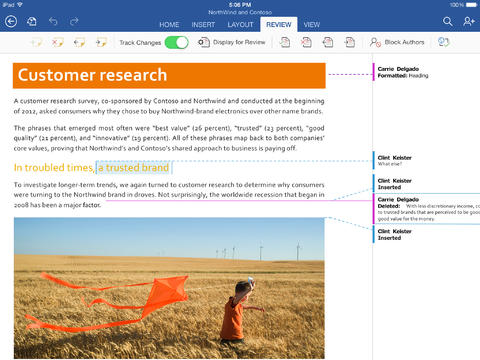
This advancement might not seem that world-changing, although it's surprising that Microsoft has finally launched Office apps on the Apple iPad. What is game-changing for business users: The apps sync securely to the cloud. The apps are also free for business users who've already standardized on Office 365 and pay the monthly Web usage storage fees. Importantly, the apps were designed for tablet use, meaning they support swiping and other gestures.

Basic6

Using a console to manage cloud servers and data center services in one view lets you accomplish tasks such as managing accounts, setting passwords and controlling Amazon Elastic Compute Cloud (EC2) features.
The main innovation with Basic6, though, is that the dashboard works in real-time for services such as Box and AWS at the same time. Most features are managed using a tree structure on the left pane. The console maintains an audit trail of exactly which changes were made to which cloud services.

Box View

Writing code for the cloud might be about as dull as a routine health exam, but Box is making it as easy as possible. One innovation, Box View, essentially gives even nonprogrammers a way to upload a business document and create rich HTML sites with an embedded document viewer. It's also a sign of things to come — that is, the cloud will continue to evolve in terms of developing custom apps and features that match business needs.

Amazon WorkSpaces

Offering a virtual desktop to employees has always presented one great IT challenge: Making sure the desktop is always available and tuned for speedy performance. Amazon recently started offering WorkSpaces, a cloud-based desktop that runs on laptops and tablets.
The main innovation of Amazon WorkSpaces concerns network optimization using Amazon Web Services; this provides the same kind of availability you've come to expect from a cloud storage service or custom application.

SmartVue

Video surveillance in a corporate setting is a different beast from home surveillance; there are likely policies about encrypting the signal, storing the recorded video and managing the cameras, among other things. The Smartvue cloud surveillance servers lets you view and manage cameras from a Web browser. Security cameras installed on premises can link to the cloud server for policy management, storage and security controls — and many third-party cameras will work just fine.